In these last few days, I have noticed that players everywhere are trying to protest against Konami (yet again) due to the banlist. People are threatening to quit or switch to another game, and that's their decision. Heck, I have switched to MTG last time around but it's because I got tired of the players involved in the very YGO game. However, I haven't quit. Why? Because I actually enjoy this game for what it's originally supposed to be, just a fun game with friends. And yet, players out there aren't discussing about just playing casually (many are, but you get my point).
And I gotta say, there's nothing wrong with casual play. To go even further, I would say that I would never go back to competitive play just because casual games are too much fun. I have played competitively a few years back, mostly during the early times of this very blog. However, I always kept coming back to casual dueling. It wasn't because of the format changes, because I was a bad player, or any other thing like that. I kept playing casually because I believe that's where the real heart of the game lies. You can play any aspect of the game, whether it be casual or competitive, and that's fine. But a lot of people will tell you that with casual, they have the most fun.
First off, we get to play whatever deck we want. I have had casual duels with opponents ranging from Ice Barriers all the way up to Wind-Ups. The most fun aspect of casual for me is that you never know what you're gonna get. You might face a familiar archetype or deck, but perhaps they add a different spin on things. Perhaps you face some decks that give you nightmares, and others that make you laugh. For me, casual isn't about winning or losing, but about how fun a game can be. I would rather have a pretty close game where it's back and forth, than to constantly be making my opponents scoop consistently every game.
No matter what way you look at it, casual dueling is one of the ways a player can really get the most out of any card game. So before you go about trying to boycott a company or consider quitting because of a horrible format, stop and think about what this game really means. Because if you truly enjoy this or any card game for what it is, then you will continue to play casually. And if you quit because of a format change, then perhaps you don't enjoy the game as much as you thought.
To end on a lighter note, just have fun with it. After all, it's just a game. No reason to riot over something we do for fun. And if you want to quit from competitive play to just play casually every now and then, power to you. And if you just wanna quit and never come back, then power to you as well. Just don't make such a big deal about it.

Showing posts with label Articles. Show all posts
Showing posts with label Articles. Show all posts
Friday, February 24, 2012


Monday, February 20, 2012
Thoughts on the March Banlist
First of all, I'm not going to do any complaining or ranting today. I see a lot of people going off in anger about how it's all about money and the format is ruined and all that. Instead, I'm just going to look at the effects the list will have and share some of my thoughts.
First off, seeing the Plant Synchro deck get hit was no surprise. However, I had no idea they were going to bring out the weed whacker on it and kill it completely. I'm all for bringing down decks if they are too OP, but at least keep them to the point where they can still be functional for casual games. That's why I still run Blackwings, I got no problem with the deck being nerfed but still being able to function well. That said, the Plant deck was the hardest hit in this list (losing 2 main tuners and one Tengu). More on Tengu for another day, since a curious note merits an article on it's own.
Trishula getting banned was really no surprise, since it was a problem solver for Agents and any other deck that could summon it quickly. And yes, it has a lot of counters, but it's still a pretty powerful card. So I understand why they took it down. Same thing when it came to Trap Dustshoot, it was pretty much a problem solver early game and it determined the winner way too quickly at times. Sure, Dustshoot could sometimes not work as well as you wanted to, but that's not the point. Despite both cards having many weaknesses or counters, they still had a heavy influence on determining the outcome of a duel.
The limits were less than expected, to be honest. Seeing Earth limited is no surprise, since it's both a tuner and a searcher. Same thing with TG Striker, but this one did strike me as a surprise. However, since TG Agents were going berserk, they decided to axe the tuners.
Now that I think about it, this list has been quite the massacre for tuners in general. Bulb, Spore, Striker, and Earth all either limited or banned. Someone really wants to push Xyz monsters and watch Synchro monsters become the new Fusions. There are other ways to go about this. But again, I see what their purpose is quite clearly at this point.
Play Xyz, don't play Synchros. I should have seen this coming back when Goyo got the axe, but I didn't know it was going to be this strong. Anyways, moving on...
Lumina, Emergency Teleport, and Smoke Signal going back to 2 gives a helpful boost to their respective decks. Psychics and Psychic Hybrids will be a bit more viable now, as well as LS /Twilight due to an essential card going back up. So we will see how this impacts the current metagame. And no, I'm not leaving Samurai behind. I know they can put up a good fight too.
And then there's Torrential Tribute going up to 2 as well. This is quite fun, seeing as how it shows more punishment for overextension and helps protect you against massive swarms. So now there will be 2 of these, along with 2 of Warning/Bottomless and 2 Compulsory to have some good field control. Not bad.
However, the list didn't address any of the newer decks (Rabbit, Wind-Up, Inzektor) and it's no surprise people are complaining. No doubt that it will truly be a very expensive metagame, as well as a very insane one. I understand why people are saying it's going to be dominated by those three alone, but it's too early to tell. Who knows? Perhaps another deck rises to the occasion? That hasn't stopped players before. And yet, the format makes me happy that I've been playing just casually for almost a year now. To be honest, I wouldn't last half a round at a tourney in this format. And that's alright with me. I know that competitive play is no longer for me (besides, there's also MTG).
So take the list for what it is. Don't complain, but rather prepare. But I gotta admit, I fear where the game might head if it keeps going this way. It's reasons like the banlist that remind me why I stick to casual decks, because sometimes it's better to just invest less in decks you will enjoy using with friends rather than to spend a fortune and lose it a few months after.
I think that covers tonight's article on the banlist. Hope you enjoyed this article.
First off, seeing the Plant Synchro deck get hit was no surprise. However, I had no idea they were going to bring out the weed whacker on it and kill it completely. I'm all for bringing down decks if they are too OP, but at least keep them to the point where they can still be functional for casual games. That's why I still run Blackwings, I got no problem with the deck being nerfed but still being able to function well. That said, the Plant deck was the hardest hit in this list (losing 2 main tuners and one Tengu). More on Tengu for another day, since a curious note merits an article on it's own.
Trishula getting banned was really no surprise, since it was a problem solver for Agents and any other deck that could summon it quickly. And yes, it has a lot of counters, but it's still a pretty powerful card. So I understand why they took it down. Same thing when it came to Trap Dustshoot, it was pretty much a problem solver early game and it determined the winner way too quickly at times. Sure, Dustshoot could sometimes not work as well as you wanted to, but that's not the point. Despite both cards having many weaknesses or counters, they still had a heavy influence on determining the outcome of a duel.
The limits were less than expected, to be honest. Seeing Earth limited is no surprise, since it's both a tuner and a searcher. Same thing with TG Striker, but this one did strike me as a surprise. However, since TG Agents were going berserk, they decided to axe the tuners.
Now that I think about it, this list has been quite the massacre for tuners in general. Bulb, Spore, Striker, and Earth all either limited or banned. Someone really wants to push Xyz monsters and watch Synchro monsters become the new Fusions. There are other ways to go about this. But again, I see what their purpose is quite clearly at this point.
Play Xyz, don't play Synchros. I should have seen this coming back when Goyo got the axe, but I didn't know it was going to be this strong. Anyways, moving on...
Lumina, Emergency Teleport, and Smoke Signal going back to 2 gives a helpful boost to their respective decks. Psychics and Psychic Hybrids will be a bit more viable now, as well as LS /Twilight due to an essential card going back up. So we will see how this impacts the current metagame. And no, I'm not leaving Samurai behind. I know they can put up a good fight too.
And then there's Torrential Tribute going up to 2 as well. This is quite fun, seeing as how it shows more punishment for overextension and helps protect you against massive swarms. So now there will be 2 of these, along with 2 of Warning/Bottomless and 2 Compulsory to have some good field control. Not bad.
However, the list didn't address any of the newer decks (Rabbit, Wind-Up, Inzektor) and it's no surprise people are complaining. No doubt that it will truly be a very expensive metagame, as well as a very insane one. I understand why people are saying it's going to be dominated by those three alone, but it's too early to tell. Who knows? Perhaps another deck rises to the occasion? That hasn't stopped players before. And yet, the format makes me happy that I've been playing just casually for almost a year now. To be honest, I wouldn't last half a round at a tourney in this format. And that's alright with me. I know that competitive play is no longer for me (besides, there's also MTG).
So take the list for what it is. Don't complain, but rather prepare. But I gotta admit, I fear where the game might head if it keeps going this way. It's reasons like the banlist that remind me why I stick to casual decks, because sometimes it's better to just invest less in decks you will enjoy using with friends rather than to spend a fortune and lose it a few months after.
I think that covers tonight's article on the banlist. Hope you enjoyed this article.
Tuesday, September 20, 2011
The Art of Negation
Negation, one of the most common elements of any card game. It prevents an opponent from putting something into play and quickly dismisses it, leaving you to see another turn if you negated the right thing. However, negation does have it's issues.
But how can negation be so complicated, you ask?
Simple. It's all in the wording and the purpose.
First off, when you negate an opponent's card, it's quickly sent to the discard pile or graveyard as a result. Thus, said card never actually got to see play. But again, it's not as simple.
Why? Here's an example as to how negation can complicate things.
To use Solemn Warning as an example, it states that it negates AND destroys said card. Normally, this would never be an issue. However, there are cards that have either vague rulings or effects that they can simply activate even when they are negated. A prime example of this can be found in either Light and Darkness Dragon or Scrap Dragon, which state that their effects activate when they are destroyed and sent to the graveyard. However, the wording doesn't state from where it has to be destroyed (such as Dandylion activating when sent to the graveyard from anywhere, even as an Xyz Material).
Such wording creates a loophole in which the player can simply activate their effects upon their destruction, even after being negated. Why is that? "Negate AND destroy that card" can be blamed for such things. Now while this seems like a perfectly normal thing, considering how YGO has always said negate and destroy, it creates a different meaning as to what negation means all together. It should be about stopping a play completely, not having said negation backfire by a loophole.
But negation isn't just limited to preventing your opponent from putting things in play, it's also a means of defense. For example, there are cards that can prevent attacks or abilities. In cases like these, they don't necessarily have to be put into the graveyard. Prime examples of these can be Skill Drain for YGO, since it only negates monster effects but doesn't necessarily remove any cards from active play.
But how can negation be so complicated, you ask?
Simple. It's all in the wording and the purpose.
First off, when you negate an opponent's card, it's quickly sent to the discard pile or graveyard as a result. Thus, said card never actually got to see play. But again, it's not as simple.
Why? Here's an example as to how negation can complicate things.
To use Solemn Warning as an example, it states that it negates AND destroys said card. Normally, this would never be an issue. However, there are cards that have either vague rulings or effects that they can simply activate even when they are negated. A prime example of this can be found in either Light and Darkness Dragon or Scrap Dragon, which state that their effects activate when they are destroyed and sent to the graveyard. However, the wording doesn't state from where it has to be destroyed (such as Dandylion activating when sent to the graveyard from anywhere, even as an Xyz Material).
 |
| "When this card is destroyed by your opponent's card (either by battle or card effect) and sent to the graveyard..." |
Such wording creates a loophole in which the player can simply activate their effects upon their destruction, even after being negated. Why is that? "Negate AND destroy that card" can be blamed for such things. Now while this seems like a perfectly normal thing, considering how YGO has always said negate and destroy, it creates a different meaning as to what negation means all together. It should be about stopping a play completely, not having said negation backfire by a loophole.
Now, let's look at a prime example of what negation looks like in another game, shall we?
 |
| "To counter a spell or ability is to remove it from the stack, usually placing it in its owner's graveyard. This prevents the spell or ability from resolving." |
This example from MTG is rather simple. Negate a spell, period. Now when you look at the rulebook it states that it doesn't hit the field and doesn't resolve. This is quite contrary in YGO, as it applies probably 98% of the time due to the negate and destroy wording that allows certain cards to resolve due to their destruction.
 |
| A prime example of negation without removal. |
So now we saw how negation can vary in styles. There's the negation that prevents cards from being played (such as Solemn Judgment or Cancel), and then we have the kind of negation that doesn't remove cards from active play (Negate Attack or Fog) as a means of preventing effects or damage. So next time you are out to consider negating some of your opponent's plays, consider how it will negate so you can fully understand any of the following backlash. Whether it's a purposeful summon of Scrap Dragon to bait negating to trigger it's effect or the forceful negation of a card to drain your opponent's mana resources, negation has it's pros and cons. While a defensive move, it can all backfire depending on the wording of said negation.
Sunday, August 28, 2011
Weenie Decks: Small Battles of Big Proportions
Weenie decks are something we see in both Yugioh and Magic, with both being considerable decks in any style of the game itself. So what are weenie decks? Basically, weenie decks consist of a deck that relies on smaller fighters to gain victory and overpower your opponent. So let's take a look at Weenie Decks for both Magic and Yugioh.
Magic Weenie Decks:
 In MTG, weenie decks consist of decks that function well with everything being of a cost of 3 mana or less. This includes creatures, auras, equipments, and instants that combine to make the deck a force to be reckoned with. In weenie decks, most creatures would cost between 1 and 2 mana, with creatures of 3 mana still seen but in lesser numbers. Creatures with converted mana cost 4 or more normally tend to be the "boss monsters" of the deck, usually having some kind of relation to the deck. In times, weenie decks may use Planeswalkers as their boss monsters as can be the case of Elspeth.
Elspeth not only can create 1/1 soldiers, but make your smaller creatures a lot more powerful. There are other planeswalkers that follow their own distinct strategy, but some such as Garruk (the new one), Gideon Jura (with his final ability), and Ajani Vengeant can all be good considerable bosses for weenie decks.
 But weenie decks aren't all low cost creatures, they also depend on stuff to turn them into considerable opponents. Whether it be Auras or Equipments, these cards can easily turn your 2/1 weenie with flying (random example) into a 4/3 flying with double strike, for example. Cards like these provide easier control of the game, as you can not only gain bigger creatures for a lower cost, but keep mana reserved for any defensive spells you might play.
As a final verdict, MTG weenie decks rely on a combination of low cost cards to overpower your opponent and swarm the field with an army of small creatures that can do big damage. Weenie decks are known for gaining big advantage in early games, so they can be a force to be reckoned with.
Yugioh Weenie Decks:
 Now, while YGO doesn't have any resource system, it can still have weenie decks. These, however follow a similar concept of using small monsters to gain big advantage, but weenie decks here have changed across the ages. Most weenie decks now have the ability to Synchro summon massively, but since the bosses come from the Extra Deck, the main deck can still consist of weenies to make the deck work. However, there are still decks that are true to the weenie deck nature, while there are others in similar nature but use their weenies for a bigger purpose.
The first weenie decks we see in YGO are level 3 or lower monsters that are the core of the deck, and have a strategy that revolves around them. An example of a pure weenie deck in YGO can be a Wetlands oriented deck. All their monsters are level 2 or lower and use the field to gain a major buff that allows them to compete with the big monsters on their own. Not only that, but it gives them access to bigger monsters with greater ease. For most cases, these weenie decks use either fields or continuous effects (from either spells, traps, or the monsters themselves) to gain attack, while mostly ignoring equipments (contrary to MTG where auras and equipments buff individual monsters).
 And then there's the other type of weenie deck, which uses a combination of level 3 or lower monsters to gain access to bigger monsters (such as Synchros or Xyz). Decks like these consist of massive swarming with said creatures and bring out either 1 or 2 big monsters by either using their effects to recruit from the deck or be used in conjunction with other monsters to gain advantage. Weenie cards that fit this category are monsters like The Immortal Bushi, Deepsea Diva, Junk Synchron, and Tour Guide From the Underworld.
Said monsters can for bring their own massive plays. Junk Synchron can be summoned if Bushi is on the field to bring back a level 2 and make a Junk Destroyer, one of the boss monsters of their deck. Diva recruits for easy level 5 synchros on her own, or combined with another Diva can make 2 synchros if combined with other monsters. As for Tour Guide, it can make an Xyz monster out of thin air due to it's effect.
Final Verdict:
While MTG Weenie Decks may be of a similar fashion, they all tend to be pretty powerful on their own. Meanwhile, YGO Weenie Decks tend to have multiple purposes. While one of their weenie styles may be similar to the MTG mentality of small creatures gaining huge power, it's the "weenie swarm for big bosses" strategy that is predominant in this game.
Weenie decks can be a force to be reckoned with if not careful. Just because you see small monsters, doesn't mean they are easy to deal with. For these decks, there's strength in numbers.
Magic Weenie Decks:
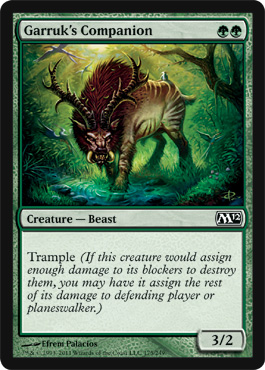 In MTG, weenie decks consist of decks that function well with everything being of a cost of 3 mana or less. This includes creatures, auras, equipments, and instants that combine to make the deck a force to be reckoned with. In weenie decks, most creatures would cost between 1 and 2 mana, with creatures of 3 mana still seen but in lesser numbers. Creatures with converted mana cost 4 or more normally tend to be the "boss monsters" of the deck, usually having some kind of relation to the deck. In times, weenie decks may use Planeswalkers as their boss monsters as can be the case of Elspeth.
Elspeth not only can create 1/1 soldiers, but make your smaller creatures a lot more powerful. There are other planeswalkers that follow their own distinct strategy, but some such as Garruk (the new one), Gideon Jura (with his final ability), and Ajani Vengeant can all be good considerable bosses for weenie decks.
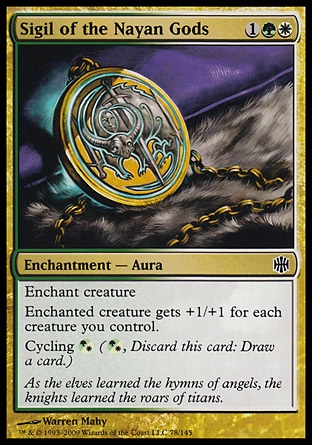 But weenie decks aren't all low cost creatures, they also depend on stuff to turn them into considerable opponents. Whether it be Auras or Equipments, these cards can easily turn your 2/1 weenie with flying (random example) into a 4/3 flying with double strike, for example. Cards like these provide easier control of the game, as you can not only gain bigger creatures for a lower cost, but keep mana reserved for any defensive spells you might play.
As a final verdict, MTG weenie decks rely on a combination of low cost cards to overpower your opponent and swarm the field with an army of small creatures that can do big damage. Weenie decks are known for gaining big advantage in early games, so they can be a force to be reckoned with.
Yugioh Weenie Decks:
 Now, while YGO doesn't have any resource system, it can still have weenie decks. These, however follow a similar concept of using small monsters to gain big advantage, but weenie decks here have changed across the ages. Most weenie decks now have the ability to Synchro summon massively, but since the bosses come from the Extra Deck, the main deck can still consist of weenies to make the deck work. However, there are still decks that are true to the weenie deck nature, while there are others in similar nature but use their weenies for a bigger purpose.
The first weenie decks we see in YGO are level 3 or lower monsters that are the core of the deck, and have a strategy that revolves around them. An example of a pure weenie deck in YGO can be a Wetlands oriented deck. All their monsters are level 2 or lower and use the field to gain a major buff that allows them to compete with the big monsters on their own. Not only that, but it gives them access to bigger monsters with greater ease. For most cases, these weenie decks use either fields or continuous effects (from either spells, traps, or the monsters themselves) to gain attack, while mostly ignoring equipments (contrary to MTG where auras and equipments buff individual monsters).
 And then there's the other type of weenie deck, which uses a combination of level 3 or lower monsters to gain access to bigger monsters (such as Synchros or Xyz). Decks like these consist of massive swarming with said creatures and bring out either 1 or 2 big monsters by either using their effects to recruit from the deck or be used in conjunction with other monsters to gain advantage. Weenie cards that fit this category are monsters like The Immortal Bushi, Deepsea Diva, Junk Synchron, and Tour Guide From the Underworld.
Said monsters can for bring their own massive plays. Junk Synchron can be summoned if Bushi is on the field to bring back a level 2 and make a Junk Destroyer, one of the boss monsters of their deck. Diva recruits for easy level 5 synchros on her own, or combined with another Diva can make 2 synchros if combined with other monsters. As for Tour Guide, it can make an Xyz monster out of thin air due to it's effect.
Final Verdict:
While MTG Weenie Decks may be of a similar fashion, they all tend to be pretty powerful on their own. Meanwhile, YGO Weenie Decks tend to have multiple purposes. While one of their weenie styles may be similar to the MTG mentality of small creatures gaining huge power, it's the "weenie swarm for big bosses" strategy that is predominant in this game.
Weenie decks can be a force to be reckoned with if not careful. Just because you see small monsters, doesn't mean they are easy to deal with. For these decks, there's strength in numbers.
Tuesday, August 16, 2011
September 2011 Format List
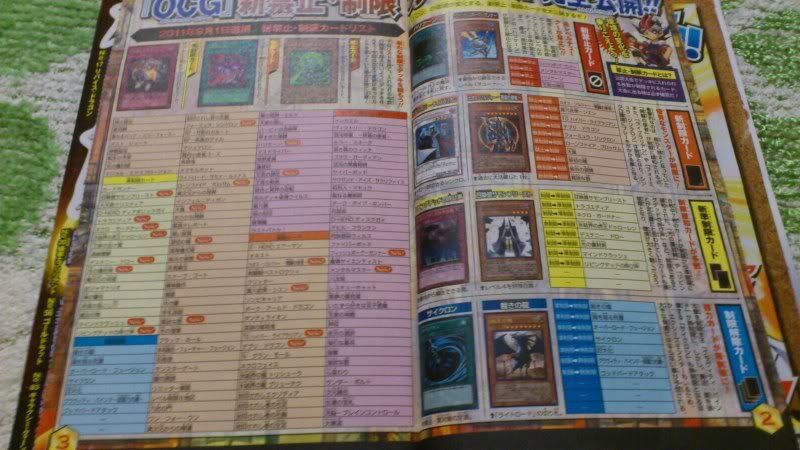
Forbidden Cards 「禁止カード」:
Fishborg Blaster「フィッシュボーグ-ガンナー」
Mind Master「メンタルマスター」
Giant Trunade「ハリケーン」
Royal Oppression「王宮の弾圧」
Restriction Cards 「制限カード」:
Black Luster Soldier - Envoy of the Beginning「カオス・ソルジャー -開闢の使者-」
Debris Dragon「デブリ・ドラゴン」
Lonefire Blossom「ローンファイア・ブロッサム」
Legendary Six Samurai - Shi En「真六武衆-シエン」
Tech Genus Hyper Librarian「TG ハイパー・ライブラリアン」
Formula Synchron 「フォーミュラ・シンクロン」
Heavy Storm 「大嵐」
Primal Seed「原初の種」
Shien's Smoke Signal「紫炎の狼煙」
Pot of Avarice「貪欲な壺」
Semi-Restriction Cards 「準制限カード」:
Summoner Monk「召喚僧サモンプリースト」
Tragoedia「トラゴエディア」
Necro Gardna「ネクロ・ガードナー」
Dewloren, Tiger King of the Ice Barrier「氷結界の虎王ドゥローレン」
Destiny Draw「デステニー・ドロー」
Swords of Revealing Light「光の護封剣」
Mind Crush「マインドクラッシュ」
Call of the Haunted「リビングデッドの呼び声」
No longer restricted 「準制限」:
Judgment Dragon「裁きの龍」
Spirit Reaper「魂を削る死霊」
Overload Fusion「オーバーロード・フュージョン」
Mystical Space Typhoon「サイクロン」
Megamorph「巨大化」
Gravity Bind「グラヴィティ・バインド-超重力の網-」
Icarus Attack「ゴッドバードアタック」
Heavy Storm back just means once again an OTK Format is upon us. MST at 3 just seems to punish a player's defenses more. Come to think of it, this format seems like it wants to punish defensive players who aren't going all out for an OTK. Control and Anti-Meta decks are going to have a harder time surviving, especially with Oppression banned.
That's what made me rage, Oppression banned. It wasn't broken at all, especially since it was a good way to counter massive special summoning. However, since all decks were splashing it and using it to their advantage after their swarm, I can assume this was the reasoning behind it. Still, it upsets me that it got the banhammer, especially with Storm coming back.
Storm and MST at 3 just makes my Gravekeeper deck feel useless since they won't have as much control anymore.
Icarus at 3 is a surprise, and might cause Blackwings to rise once again (in the TCG, since they already are awesome in the OCG).
BLS at 1 and JD at 3, combined with Necro Gardna's semi status just gave Twilight decks the green light once again. So I guess it will be a format full of "Edward Decks" going crazy all over the place.
Fishborg Blaster makes me sad, especially since it was a key card in my Fish deck. Frog Monarchs also take a hit with this, but still have other ways to bring out their lone Formula Synchron. As for my Fish deck, it's mourning the loss of a good comrade. Good night, sweet prince...
Overall, I'm not too happy with the list. I think it's promoting more OTK formats and will banish diversity once again. More than that, control players will be punished more since backrow is in greater danger and Oppression is gone.
Decks with little to no backrow will be dominant this format, but only time will tell if this will be true.
So let the madness begin! I think it's time for me to get in touch with Magic: The Gathering once again...I am going to a game that still has skill and promotes thought. And no, I'm not quitting YGO...just probably gonna play both again.
Sunday, April 17, 2011
Synchros VS Exceeds
Haven't written any articles in a long while, and taking advantage that I'm sick to sit down and finally write about something I have been analyzing for a while.
Exceeds, the brand new mechanic released for the YGO game has a lot of people talking, but Synchros had the same buzz when they were first heard of. However, which one has an edge over the other? Which seems to be the most useful mechanic? Which one has more overall utility? This and a few more questions to be answered in this following article. So let's see...where to start?
Overall Adaptability: Usability Factor
 When synchros first came out, we were also introduced to tuners, those nice little monsters that helped us summon our big white-carded bosses into battle. Tuners needed to be used in order for synchros to be summoned, no exceptions. And while tuners could be used on their own, many of them quickly found synergy with their decks to make synchro summoning easy (Krebons for Tele-DAD, Blackwings, Arbellum for Rescue Cat, Infernities, Junk Synchron, Quickdraw for Frogs/Plants, Kegemusha for Samurai, Royal Swamp Eel/Fishborg for Fish OTK, among others). But not all decks could handle synchro summoning, as many tried to accommodate the right tuner to the deck, but it just didn't seem to fit.
That's where Exceeds come to play. By not needing any tuners, but instead 2 or more monsters of the same level, Exceed monsters can find home in more decks now. However, the fact that they have ranks, rather than levels can affect the playability of these if combined with synchros. Which brings me to the next point...
Size Factor: Big VS Small
 As most synchros, they are known for their 2000+ attacks and incredible effects. So giving up 2 or more monsters for a big beater with a good effect seems like an excellent payoff, right? Right. However, I started noticing that exceed monsters are mostly all in the lower attack status. So far, Hope is the strongest one, coming off at 2500ATK. But where does that leave the others? Unlike synchros, exceeds play a bit more of a control route. Let's compare them both for a second...
On the synchro side we have a classic: Stardust Dragon, a monster that not only can support itself in battle, but also has a great effect that adds a control. But that's not it, they had their beaters like Goyo, Red Dragon, Red Nova, Colossal, Shooting Star, that while they still had some kind of control, they were normally epic monsters with incredible attack.
But on the exceed side we have No. 34 Electronic Computer-Beast Tera Byte: high defense but no attack whatsoever. Rank 3 that is summoned by 3 level 3 monsters. However, it's effect lets you take control of an opponent's level 4 or lower monster at the cost of an exceed material monster. While not offensive, it grants a higher degree of control, as the monster you take can be used for either a tribute, a synchro summon (if you are using tuners), or another exceed summon.
So synchros by far have a greater attack characteristic with a slight degree of control, while exceed monsters have a much higher degree of control in return for lower attack.
The Biggest Impact: Crushing the Competition
So far, synchros have had an incredible impact since day one, as it encouraged the use of smaller monsters. However, exceeds seem to be going down that route as well, with a slight difference that they can be used to a greater degree in control decks (Gadgets anyone?). Exceeds have just gotten out now, so only time will tell if they sink or swim. But for now, things are looking quite interesting for these new monsters. Will these guys have a bigger impact than synchros did, or will they have to do with runner-up status? Only time will tell.

Exceeds, the brand new mechanic released for the YGO game has a lot of people talking, but Synchros had the same buzz when they were first heard of. However, which one has an edge over the other? Which seems to be the most useful mechanic? Which one has more overall utility? This and a few more questions to be answered in this following article. So let's see...where to start?
Overall Adaptability: Usability Factor
 When synchros first came out, we were also introduced to tuners, those nice little monsters that helped us summon our big white-carded bosses into battle. Tuners needed to be used in order for synchros to be summoned, no exceptions. And while tuners could be used on their own, many of them quickly found synergy with their decks to make synchro summoning easy (Krebons for Tele-DAD, Blackwings, Arbellum for Rescue Cat, Infernities, Junk Synchron, Quickdraw for Frogs/Plants, Kegemusha for Samurai, Royal Swamp Eel/Fishborg for Fish OTK, among others). But not all decks could handle synchro summoning, as many tried to accommodate the right tuner to the deck, but it just didn't seem to fit.
That's where Exceeds come to play. By not needing any tuners, but instead 2 or more monsters of the same level, Exceed monsters can find home in more decks now. However, the fact that they have ranks, rather than levels can affect the playability of these if combined with synchros. Which brings me to the next point...
Size Factor: Big VS Small
 As most synchros, they are known for their 2000+ attacks and incredible effects. So giving up 2 or more monsters for a big beater with a good effect seems like an excellent payoff, right? Right. However, I started noticing that exceed monsters are mostly all in the lower attack status. So far, Hope is the strongest one, coming off at 2500ATK. But where does that leave the others? Unlike synchros, exceeds play a bit more of a control route. Let's compare them both for a second...
On the synchro side we have a classic: Stardust Dragon, a monster that not only can support itself in battle, but also has a great effect that adds a control. But that's not it, they had their beaters like Goyo, Red Dragon, Red Nova, Colossal, Shooting Star, that while they still had some kind of control, they were normally epic monsters with incredible attack.
But on the exceed side we have No. 34 Electronic Computer-Beast Tera Byte: high defense but no attack whatsoever. Rank 3 that is summoned by 3 level 3 monsters. However, it's effect lets you take control of an opponent's level 4 or lower monster at the cost of an exceed material monster. While not offensive, it grants a higher degree of control, as the monster you take can be used for either a tribute, a synchro summon (if you are using tuners), or another exceed summon.
So synchros by far have a greater attack characteristic with a slight degree of control, while exceed monsters have a much higher degree of control in return for lower attack.
The Biggest Impact: Crushing the Competition
So far, synchros have had an incredible impact since day one, as it encouraged the use of smaller monsters. However, exceeds seem to be going down that route as well, with a slight difference that they can be used to a greater degree in control decks (Gadgets anyone?). Exceeds have just gotten out now, so only time will tell if they sink or swim. But for now, things are looking quite interesting for these new monsters. Will these guys have a bigger impact than synchros did, or will they have to do with runner-up status? Only time will tell.
Monday, August 16, 2010
Froggy Balboa: Ronintoadin's Quest to Become Champ
Well, another World Championship is behind us, and it's safe to say that Frogs have gone full circle. They went from ultimate underdog to world champ in half a format. And who is to thank for this great froggy success? Why none other than Ronintoadin, the Rocky Balboa of frogs.
Also, congrats to Galileo de Obaldia for winning the World Championship. Galileo, que bueno que el campeon del mundo es latino, te felicito!

Frogs had a humble start many years back when it was just Des Frog and his crew. Back then, there wasn't much to do to make a frog deck. However, Treeborn Frog was the star there, being used with Monarchs almost instantly.
 Frogs would go on to wait for support until they got a boost from LOTD with cards like Substitoad, Wetlands, Unifrog, and Froggy Forcefield. By then, frogs were starting to make headway as a "Wetlands Deck" by pairing up with other monsters that were compatible with the field, but it was still not enough to make a dent, so to speak.
Then came Crimson Crisis, the booster that gave us Flip Flop Frog and Dupe Frog (along with Submarine Frog as a TCG exclusive, but I digress) and by then frogs had something going for them. They were finally a consistent Wetlands Deck that could create a lock and access Des Croaking via Dupe Frog if necessary. By then, frogs showed up in tournaments from time to time, but not making much of an impact.
During this time, everyone used Substitoad to fuel the deck and swarm, since the most common thing to do was tribute the Scapegoat Tokens and Substitoad itself to bring out enough frogs to potentially go for game. That, or use Substitoad to mill the deck to feed cards like Pot of Avarice or simply as an engine. Either way, Substitoad was giving Wetlands and Frog decks a reason to be. Frog decks became really good decks to take to small tournaments or to annoy friends.
However, that was soon to change. Frogs got some more support in the form of Swap Frog, allowing them to not only pull a froggy switcheroo, but also mill without having to depend on Substitoad. However, that didn't seem to give them the edge they needed...
And so came their champion...Froggy Balboa! Ronintoadin
 Ronintoadin quickly changed the way people looked at and played Frogs all together. One card alone gave the deck so many possibilities. By combing Ronin with the Substitoad engine, it allowed for constant revival, which led to the discovery of it's synergy with Mass Driver. Frog FTK was born. This became the deadliest of all frog decks. Basically you mill your entire deck (mostly made up of frogs) and then revive Ronin and tribute it with Mass Driver as many times as you have to in order to pick up the win. It's an incredibly fast deck that can end a game faster than a Super Mario Bros speed run.
However, Ronin was also welcome in other decks like Frognarchs/Froggy Monarchs. By having enough frogs to supply a consistent tribute fodder, Ronin could easily become the tribute for any Monarch, LADD, Vanity's Fiend (told ya this card was good), Dark Dusk Spirit (old high school favorite), and many other tribute monsters. Ronin is also seen in other decks as tribute fodder as well, such as Fish (in some variants).
Due to Ronintoadin's potential with decks like Frog FTK and Frog Monarchs, frogs quickly hopped their way into the meta at last. They weren't the dominant species, but they were still making an impact and became a significant threat.
Today, uncertainty lies in the way of these strong amphibians, as nobody knows what the banlist may bring. Will they successfully be able to hop across the street back into their pond? Or will one of these frogs meet the same fate as Frogger during your first time playing?
Only time will tell...
Also, congrats to Galileo de Obaldia for winning the World Championship. Galileo, que bueno que el campeon del mundo es latino, te felicito!

Frogs had a humble start many years back when it was just Des Frog and his crew. Back then, there wasn't much to do to make a frog deck. However, Treeborn Frog was the star there, being used with Monarchs almost instantly.
 Frogs would go on to wait for support until they got a boost from LOTD with cards like Substitoad, Wetlands, Unifrog, and Froggy Forcefield. By then, frogs were starting to make headway as a "Wetlands Deck" by pairing up with other monsters that were compatible with the field, but it was still not enough to make a dent, so to speak.
Then came Crimson Crisis, the booster that gave us Flip Flop Frog and Dupe Frog (along with Submarine Frog as a TCG exclusive, but I digress) and by then frogs had something going for them. They were finally a consistent Wetlands Deck that could create a lock and access Des Croaking via Dupe Frog if necessary. By then, frogs showed up in tournaments from time to time, but not making much of an impact.
During this time, everyone used Substitoad to fuel the deck and swarm, since the most common thing to do was tribute the Scapegoat Tokens and Substitoad itself to bring out enough frogs to potentially go for game. That, or use Substitoad to mill the deck to feed cards like Pot of Avarice or simply as an engine. Either way, Substitoad was giving Wetlands and Frog decks a reason to be. Frog decks became really good decks to take to small tournaments or to annoy friends.
However, that was soon to change. Frogs got some more support in the form of Swap Frog, allowing them to not only pull a froggy switcheroo, but also mill without having to depend on Substitoad. However, that didn't seem to give them the edge they needed...
And so came their champion...Froggy Balboa! Ronintoadin
 Ronintoadin quickly changed the way people looked at and played Frogs all together. One card alone gave the deck so many possibilities. By combing Ronin with the Substitoad engine, it allowed for constant revival, which led to the discovery of it's synergy with Mass Driver. Frog FTK was born. This became the deadliest of all frog decks. Basically you mill your entire deck (mostly made up of frogs) and then revive Ronin and tribute it with Mass Driver as many times as you have to in order to pick up the win. It's an incredibly fast deck that can end a game faster than a Super Mario Bros speed run.
However, Ronin was also welcome in other decks like Frognarchs/Froggy Monarchs. By having enough frogs to supply a consistent tribute fodder, Ronin could easily become the tribute for any Monarch, LADD, Vanity's Fiend (told ya this card was good), Dark Dusk Spirit (old high school favorite), and many other tribute monsters. Ronin is also seen in other decks as tribute fodder as well, such as Fish (in some variants).
Due to Ronintoadin's potential with decks like Frog FTK and Frog Monarchs, frogs quickly hopped their way into the meta at last. They weren't the dominant species, but they were still making an impact and became a significant threat.
Today, uncertainty lies in the way of these strong amphibians, as nobody knows what the banlist may bring. Will they successfully be able to hop across the street back into their pond? Or will one of these frogs meet the same fate as Frogger during your first time playing?
Only time will tell...
Monday, August 9, 2010
Yugioh: A Lesson on Economics!
With many players today treating Yugioh as a geek's version of the stock market or an independent business, it seems this game is becoming more like it's own economy rather than just a fun hobby.
People now look at your binder and give you the monetary value of your stuff, rather than just their own individual values. Why is this? First, we have to check the various factors that have been turning this game into it's own economic system...
Reason #1: The Secondary Market
This is pretty much the cancer that has spread through all card games (because it troubles many players). By having a secondary market, card games can become expensive or cheap depending on the gods of the market. However, nobody knows who is to control this monetary dictator.
The secondary market has been influencing many players in this game for quite some time now (perhaps during the ReturnDAD or Tele-DAD days, I forget). This has been causing a great divide between players, since now not only do we have a great rift between casual and competitive players, but we now have a rift between players with big wallets and those who are on a budget (this may differ for some people).
The wallet players are mostly known for having binders full of multiple copies of rare cards, decks made out of the highest rarity and complaining when reprints cause their cards to drop in value. Budget players are quite the opposite. They use the lowest rarity (not always, but it's common), are known to complain about the high rarities (let's be honest, who wouldn't complain...but just to be fair and neutral), but love reprints.
Wallet players are also known to run meta decks most of the time (some wallet players play other decks, but that's not an easy thing to see), while budget players will most likely be running anti-meta or any other deck that was once expensive but is now affordable (such as Glads and Blackwings for example), as well as non-mainstream decks.
You can tell who falls into which category by the way they ask you for trades, by their folder content, and sometimes their general attitude.
However, there's another aspect that turns Yugioh into an economy besides the secondary market...
Reason #2: It's not just a game, it's a way of life....literally!
Many players nowadays turn to this game as a main source of income. While others have allowances, jobs, or any other source of income, there are those players who make a living from selling cards alone. These are the Yugioh businessmen who are constantly seen handling money during trades, knowing the value of everything (and I mean everything), and gaining massive amounts of profit in methods unknown to many (whether they are clean or not, it depends on the person).
The players who depend on this game to make a living are mostly known for being paranoid around February/September, since their source of income may be affected. They are seen in tournaments looking to score a deal, and mostly are the leaders of their own Yugioh Mafia (other article needed for this one). They usually have others do their work for them, and some are rarely seen playing at all (not applying for everyone, since some play anyways). To some extent, they also enter tournaments to win (cleanly or underhanded is up to you to judge) and sell their prizes for cash, whether they be promos or boosters.
Reason #3: The Stock Market at YCS
Like most players in this game, YCS and other events turn into a guide into what the meta is and what players will be using. However, it's not just a guide to the meta, but a guide to some cash. By having different results in the YCS, the placements decks get will sometimes dictate the prize of specific cards in proportion to it's usage.
For example: X-Sabers once didn't cost as much since they didn't top major events, but once they managed to win, their prices skyrocketed and became a good investment.
By using tournaments as guides, players can know what cards to invest in. This gives them an edge in terms of profit, since they can help both the secondary market and their wallets. There are times when underdog decks rise to fame and become a good investment, by which will cause a rise in the YGO Stock Market which feels like a wave of chaos ensuing the players as they quickly swarm to the new cards for profit.
So whether you play for fun, fame or profit...one can't deny that this game has developed it's own economy which has now become part of the very game itself. Remember to keep your wits at all times and make the best decisions that fit your style best. Don't let this internal economy get the best of you, or else it will be quite the frustrating time.
People now look at your binder and give you the monetary value of your stuff, rather than just their own individual values. Why is this? First, we have to check the various factors that have been turning this game into it's own economic system...
Reason #1: The Secondary Market
This is pretty much the cancer that has spread through all card games (because it troubles many players). By having a secondary market, card games can become expensive or cheap depending on the gods of the market. However, nobody knows who is to control this monetary dictator.
The secondary market has been influencing many players in this game for quite some time now (perhaps during the ReturnDAD or Tele-DAD days, I forget). This has been causing a great divide between players, since now not only do we have a great rift between casual and competitive players, but we now have a rift between players with big wallets and those who are on a budget (this may differ for some people).
The wallet players are mostly known for having binders full of multiple copies of rare cards, decks made out of the highest rarity and complaining when reprints cause their cards to drop in value. Budget players are quite the opposite. They use the lowest rarity (not always, but it's common), are known to complain about the high rarities (let's be honest, who wouldn't complain...but just to be fair and neutral), but love reprints.
Wallet players are also known to run meta decks most of the time (some wallet players play other decks, but that's not an easy thing to see), while budget players will most likely be running anti-meta or any other deck that was once expensive but is now affordable (such as Glads and Blackwings for example), as well as non-mainstream decks.
You can tell who falls into which category by the way they ask you for trades, by their folder content, and sometimes their general attitude.
However, there's another aspect that turns Yugioh into an economy besides the secondary market...
Reason #2: It's not just a game, it's a way of life....literally!
Many players nowadays turn to this game as a main source of income. While others have allowances, jobs, or any other source of income, there are those players who make a living from selling cards alone. These are the Yugioh businessmen who are constantly seen handling money during trades, knowing the value of everything (and I mean everything), and gaining massive amounts of profit in methods unknown to many (whether they are clean or not, it depends on the person).
The players who depend on this game to make a living are mostly known for being paranoid around February/September, since their source of income may be affected. They are seen in tournaments looking to score a deal, and mostly are the leaders of their own Yugioh Mafia (other article needed for this one). They usually have others do their work for them, and some are rarely seen playing at all (not applying for everyone, since some play anyways). To some extent, they also enter tournaments to win (cleanly or underhanded is up to you to judge) and sell their prizes for cash, whether they be promos or boosters.
Reason #3: The Stock Market at YCS
Like most players in this game, YCS and other events turn into a guide into what the meta is and what players will be using. However, it's not just a guide to the meta, but a guide to some cash. By having different results in the YCS, the placements decks get will sometimes dictate the prize of specific cards in proportion to it's usage.
For example: X-Sabers once didn't cost as much since they didn't top major events, but once they managed to win, their prices skyrocketed and became a good investment.
By using tournaments as guides, players can know what cards to invest in. This gives them an edge in terms of profit, since they can help both the secondary market and their wallets. There are times when underdog decks rise to fame and become a good investment, by which will cause a rise in the YGO Stock Market which feels like a wave of chaos ensuing the players as they quickly swarm to the new cards for profit.
So whether you play for fun, fame or profit...one can't deny that this game has developed it's own economy which has now become part of the very game itself. Remember to keep your wits at all times and make the best decisions that fit your style best. Don't let this internal economy get the best of you, or else it will be quite the frustrating time.
Friday, July 30, 2010
Competitive Play: The Different Levels
Now, I have been reading and hearing from numerous players about how one can be competitive or not. Certain people one is only competitive by going to regionals and above, while others just say they don't duel casual games and the like.
I feel like it's time to break down the different levels of competitive play, along the diverse groups that inhabit each level, along with other general characteristics.
In the end, we will see how everyone can be competitive, that it's not just limited to "pro players" and other things. People define their own level.
Level 1: Local Competition
For some people, this is the highest level of competition they are going to get. Also, one of the most important, if not, the most important level. Why? This is where everyone begins. While Regional and other levels are more rewarding, locals bring that competitive environment in a much more controlled state. It is also one of the best places to compete, mostly due to the lack of cheating and such (mostly due to the low amount of pressure it has on players, but it still happens).
Locals are also the highest level some players get mostly due the lack of regionals or any higher end tournaments in their area. In this case, the locals can become quite intense. Still, local tournaments are mostly suited for the players who really like to enjoy this game for what it's worth and overall seek a good time.
Level 2: The Regional Champ
Still similar to level 1, Regional players have that higher competitive drive than the local players. While some of them are still genuine players and have fun, we begin to see a bigger percentage of netdeckers and elitist attitudes in here. Why? A chance to go to Nationals is something players of the higher category desire and must pass through this level.
While regional play can still be quite enjoyable, the rumors of alleged cheating and other shenanigans may appear. Some players may have hostile and bad attitudes, but generally won't be too common. Most people will go to regionals just to have a good time, while others just shoot for the prize and leave their fun side at the door.
Level 3: Hey ma, I'm a Card Game Big Shot!
Commonly the players you see only at big events like YCS, former SCJ's Championships, and Nationals. This level still has players from levels 1 and 2, but they are a minority. They are commonly seen as "scrubs" or "noobs" because they choose to use their favorite decks or non-mainstream decks. This level is mostly inhabited by players who only seek to win in this game at any means necessary, even if it for some that's cheating.
There are still many players who innovate and have fun who get far, but are often overshadowed by the glorious champs and tier 1 players. It's a much more aggressive form of competition, and not for everyone.
Level 4: To Infinity and Beyond!
These are the biggest competitors of all, mostly because they reach Nationals and even Worlds. Very recognized for their accomplishments. However, this level also has it's intensity. After the shenanigans witnessed in the previous US Nats, one can speculate that it may be an aggressive environment full of cheating, stealing, and other things. But that's not a guarantee. Most can still have a pleasant experience here.
Level 5: I'm too Good for This!
While not related to any of the other levels in terms of tournaments, level 5 competition is created for those players who strictly play tournaments and refuse to play casually. This level is the toughest of all.
There are people who look down on non-competitive players and talk smack about them, but really don't get to see what's going on in the lowest level. So level 1 is full of players who are still learning their way around, combined with skilled players and such. Level 1 is the true nightmare for Level 5 competitors it seems, since it represents the melting pot of these games, people with all levels of skill coming together to have fun.
And so, these are the 5 levels of competitive play, more or less summed up. It's all I could write from a hospital room at 1am, so I might do a revisit of this article in the future. But for now, that's all I got.
Perhaps now, we can all get a better understanding of the different levels of competitive play and stop bashing one another.
I feel like it's time to break down the different levels of competitive play, along the diverse groups that inhabit each level, along with other general characteristics.
In the end, we will see how everyone can be competitive, that it's not just limited to "pro players" and other things. People define their own level.
Level 1: Local Competition
For some people, this is the highest level of competition they are going to get. Also, one of the most important, if not, the most important level. Why? This is where everyone begins. While Regional and other levels are more rewarding, locals bring that competitive environment in a much more controlled state. It is also one of the best places to compete, mostly due to the lack of cheating and such (mostly due to the low amount of pressure it has on players, but it still happens).
Locals are also the highest level some players get mostly due the lack of regionals or any higher end tournaments in their area. In this case, the locals can become quite intense. Still, local tournaments are mostly suited for the players who really like to enjoy this game for what it's worth and overall seek a good time.
Level 2: The Regional Champ
Still similar to level 1, Regional players have that higher competitive drive than the local players. While some of them are still genuine players and have fun, we begin to see a bigger percentage of netdeckers and elitist attitudes in here. Why? A chance to go to Nationals is something players of the higher category desire and must pass through this level.
While regional play can still be quite enjoyable, the rumors of alleged cheating and other shenanigans may appear. Some players may have hostile and bad attitudes, but generally won't be too common. Most people will go to regionals just to have a good time, while others just shoot for the prize and leave their fun side at the door.
Level 3: Hey ma, I'm a Card Game Big Shot!
Commonly the players you see only at big events like YCS, former SCJ's Championships, and Nationals. This level still has players from levels 1 and 2, but they are a minority. They are commonly seen as "scrubs" or "noobs" because they choose to use their favorite decks or non-mainstream decks. This level is mostly inhabited by players who only seek to win in this game at any means necessary, even if it for some that's cheating.
There are still many players who innovate and have fun who get far, but are often overshadowed by the glorious champs and tier 1 players. It's a much more aggressive form of competition, and not for everyone.
Level 4: To Infinity and Beyond!
These are the biggest competitors of all, mostly because they reach Nationals and even Worlds. Very recognized for their accomplishments. However, this level also has it's intensity. After the shenanigans witnessed in the previous US Nats, one can speculate that it may be an aggressive environment full of cheating, stealing, and other things. But that's not a guarantee. Most can still have a pleasant experience here.
Level 5: I'm too Good for This!
While not related to any of the other levels in terms of tournaments, level 5 competition is created for those players who strictly play tournaments and refuse to play casually. This level is the toughest of all.
There are people who look down on non-competitive players and talk smack about them, but really don't get to see what's going on in the lowest level. So level 1 is full of players who are still learning their way around, combined with skilled players and such. Level 1 is the true nightmare for Level 5 competitors it seems, since it represents the melting pot of these games, people with all levels of skill coming together to have fun.
And so, these are the 5 levels of competitive play, more or less summed up. It's all I could write from a hospital room at 1am, so I might do a revisit of this article in the future. But for now, that's all I got.
Perhaps now, we can all get a better understanding of the different levels of competitive play and stop bashing one another.
Friday, January 8, 2010
Speaking my mind...Rai-Oh Contradictions.
Everyone who knows me knows how I feel about this matter. I have said my opinion concerning this matter various times on Pojo, but it's either ignored or everyone else who shares this opinion gets called a "bad player."
However, it's curious to me. All the players in the Gadget thread seem to think that Rai-Oh is a staple, yet it's contradictory to the whole Gadget engine and theme.

Here are the pros and cons concerning Rai-Oh:
Pros:
-Negates Special Summon
-High Attack
-Negates Searchers and Recruiters (Reinforcement of the Army, Charge of the Light Brigade, Sangan, among others)
-Compatible with Oppression themes.
Cons:
-Blocks your Gadgets from searching each other when used in a Gadget deck(most people would simply respond by saying "learn when to summon Rai-Oh" but let's have some sense here, it's a GADGET DECK and you are running something that contradicts the very name of the deck).
Now, while it does have more pros than cons in this matter, it doesn't quite apply in a Gadget deck. Yes, it locks your opponent and prevents special summoning...but there are other cards that can do that without hurting the searchability of Gadgets.
Now, I have a theory as to why many believe it's a staple in this kind of deck, and it's a theory I simply call "The Player X Effect."
This theory states that because one player (I assume it's the very Player X) does very well at a SJC event (don't remember the story quite well, but I believe he topped with Gadgets or got near to doing so) with his Gadget deck, then everyone in the thread tries to copy his deck as much as possible. He has become the leader of the Gadget community (again, based on observations...nothing personal Player X, just trying to add my experiences in the thread to my argument) and so, all of his followers have closed off their ideas and only do what Player X does.
One of these things is the use of Rai-Oh in a Gadget deck. It has gotten praise, yet people seem to forget how contradictory it is to the theme. Yet, instead of thinking outside the box (like what I did with Vanity Gadgets due to budget reasons) and making new Gadget Decks that work, I have been flooded by the same deck again and again.
Ironically enough, this is the best I could have found in the opinions concerning the contradictions between Rai-Oh and Gadgets in the thread, still in favor of the combination:
I see the point, but doesn't it bother them that Rai-Oh actually clashes and contradicts the very theme? This is why I write it here in my blog instead of Pojo, somebody is bound to listen to reason. Now, there are many that agree with this statement. And I have managed to find supporting arguments from those who agree on this matter:
While DoctroNik's post was the one that mostly summed up my opinion, most people being on the "Pro-TK Side" argued their side in a different manner:
1- The theory of "Player X" as mentioned before (changed real name to hide the identity) and appealing to authority on this issue.
2-Stating the obvious reasons of what Rai-Oh does, along with showing evidence of the contradiction in strategy and not caring that it does.
Another argument found on the pro side:
Thunder King Rai-Oh is an excellent card for Anti-Meta decks, but it just has no place in Gadgets. It ruins their synergy and even though it is meant to slow the opponent down, you can find yourself slowed down when all those Gadgets pile up in your hand and find yourself in a tougher situation.
I may get flamed for this article, but I just had to speak my mind concerning this issue. It may even cost me some of the credibility I have created amongst some peers on the board. But to this I say, I don't care. I will speak my mind on this issue and many others.
Hopefully, this article has made you see things from a different perspective and could possibly give some thought about how to use certain cards properly. To all the Gadget players, open the doors to new ideas, because there are tons of Gadget decks that have yet to be discovered that could have some serious potential. To those flamers who are going to give me some serious heat for this article, don't go insulting me. I would prefer you just ignore this and move along.
Thank you for reading this first real article.
However, it's curious to me. All the players in the Gadget thread seem to think that Rai-Oh is a staple, yet it's contradictory to the whole Gadget engine and theme.

Here are the pros and cons concerning Rai-Oh:
Pros:
-Negates Special Summon
-High Attack
-Negates Searchers and Recruiters (Reinforcement of the Army, Charge of the Light Brigade, Sangan, among others)
-Compatible with Oppression themes.
Cons:
-Blocks your Gadgets from searching each other when used in a Gadget deck(most people would simply respond by saying "learn when to summon Rai-Oh" but let's have some sense here, it's a GADGET DECK and you are running something that contradicts the very name of the deck).
Now, while it does have more pros than cons in this matter, it doesn't quite apply in a Gadget deck. Yes, it locks your opponent and prevents special summoning...but there are other cards that can do that without hurting the searchability of Gadgets.
Now, I have a theory as to why many believe it's a staple in this kind of deck, and it's a theory I simply call "The Player X Effect."
This theory states that because one player (I assume it's the very Player X) does very well at a SJC event (don't remember the story quite well, but I believe he topped with Gadgets or got near to doing so) with his Gadget deck, then everyone in the thread tries to copy his deck as much as possible. He has become the leader of the Gadget community (again, based on observations...nothing personal Player X, just trying to add my experiences in the thread to my argument) and so, all of his followers have closed off their ideas and only do what Player X does.
One of these things is the use of Rai-Oh in a Gadget deck. It has gotten praise, yet people seem to forget how contradictory it is to the theme. Yet, instead of thinking outside the box (like what I did with Vanity Gadgets due to budget reasons) and making new Gadget Decks that work, I have been flooded by the same deck again and again.
Ironically enough, this is the best I could have found in the opinions concerning the contradictions between Rai-Oh and Gadgets in the thread, still in favor of the combination:
"Yeah. It's just like thunder King vs Gadgets, even though it clashes it's effect is too good to miss out on."
I see the point, but doesn't it bother them that Rai-Oh actually clashes and contradicts the very theme? This is why I write it here in my blog instead of Pojo, somebody is bound to listen to reason. Now, there are many that agree with this statement. And I have managed to find supporting arguments from those who agree on this matter:
The whole point of the gadget deck is: summon gadget, search gadgetQuote from DoctorNik on Pojo
not summon t king, no more gadget searches until your monster dies
what part are you guys not getting?
Also, the more you don't summon gadget, the higher the chance of drawing multiple gadgets, which is absolutely terrible
Also what purpose does Rai-oh play in the deck?
Every card must serve a purpose. And "negating a special summon" isn't good enough. There are better cards to do that
While DoctroNik's post was the one that mostly summed up my opinion, most people being on the "Pro-TK Side" argued their side in a different manner:
LOL at people suggesting that Rai-Oh is bad in Gadgets. Guess what: "Player X" is using it in his build. The majority of the Gadget thread run Rai-Oh.This statement shows 2 common things:
Rai-Oh is amazing for shutting down opposing Goblin Zombie/Charge/Black Whirlwind/ROTA, and it shuts down boss monsters (DAD/JD/Synchros/Gyzarus). Who cares if you lock your own Gadgets down if you can slow your opponent down? It's not as if Rai-Oh will be on the field all the time. Plus if you are playing right, Rai-Oh doesn't conflict with Gadgets too much.
1- The theory of "Player X" as mentioned before (changed real name to hide the identity) and appealing to authority on this issue.
2-Stating the obvious reasons of what Rai-Oh does, along with showing evidence of the contradiction in strategy and not caring that it does.
Another argument found on the pro side:
Anyone who doesn't play Rai-Oh in Gadgets this format is going to lose, and therefore, is bad.
Most of the arguments on the pro side were launching statements like this. In other words, "if you don't run Rai-Oh in Gadgets you are deemed a bad player and are destined to lose." Now, I'm no SJC/Regional Champion to be telling people what to do so they can mindlessly follow, but I do have some common sense. If you are playing a strategy where one of your ace cards contradicts the main theme, then shouldn't you play that card in a place where it does fit?
Thunder King Rai-Oh is an excellent card for Anti-Meta decks, but it just has no place in Gadgets. It ruins their synergy and even though it is meant to slow the opponent down, you can find yourself slowed down when all those Gadgets pile up in your hand and find yourself in a tougher situation.
I may get flamed for this article, but I just had to speak my mind concerning this issue. It may even cost me some of the credibility I have created amongst some peers on the board. But to this I say, I don't care. I will speak my mind on this issue and many others.
Hopefully, this article has made you see things from a different perspective and could possibly give some thought about how to use certain cards properly. To all the Gadget players, open the doors to new ideas, because there are tons of Gadget decks that have yet to be discovered that could have some serious potential. To those flamers who are going to give me some serious heat for this article, don't go insulting me. I would prefer you just ignore this and move along.
Thank you for reading this first real article.
Subscribe to:
Comments (Atom)